The past months have been full of activity for our team! In addition to joining the Summer School at the University of Miskolc, we have been busy taking part in a range of inspiring events, strengthening collaborations, and working on new publications — all with one shared mission: to contribute to the successful implementation of circular technologies.
A highlight of this season was the EIT Raw Materials Summit (13–15 May, Brussels), where Maria Mamelkina and Teemu Kinnarinen (LUT University) attended. The Summit focused on one of Europe’s most pressing challenges: securing critical raw materials (CRM). Ensuring access to CRMs is essential not only for achieving climate goals, but also for safeguarding security, strategic autonomy, and Europe’s industrial competitiveness. The event brought together policymakers, industry leaders, investors, and innovators — a unique platform for shaping Europe’s path toward a sustainable future.
Strengthening Collaborations Across Europe
In June, Mohammad Jaber (University of Miskolc) took part in an inspiring mobility journey, spending June 2–6 at TU Delft University and June 9–30 at LUT University. At TU Delft, engaging meetings with colleagues provided valuable insights into best practices in project management, innovation, and technology transfer — knowledge that further enriches our collective expertise. The stay at LUT focused on deepening research collaboration and building strategic partnerships. Discussions with Hanna-Mari Husu, Salvatore Ruggiero, and members of the CiRCLETECH research groups helped advance several joint projects and sparked new opportunities within Horizon Europe. A special highlight was attending the seminar “EU Emission Trading: Markets and Policy for Carbon Pricing,” delivered by Ismo Ulvila (European Commission), offering valuable perspectives on Europe’s climate and carbon pricing policies.

Showcasing Research at ISPIM 2025
From 15–18 June 2025, the vibrant city of Bergen, Norway hosted the ISPIM Innovation Conference, themed “Innovation Powered by Nature.” Representing LUT University, Sajid Nazir joined the international community of innovation researchers and practitioners. Reflecting on his experience, Sajid shared: “It was a very successful conference, and I received encouraging feedback on my paper on Industry 5.0 transitioning.” The event provided a unique platform for exchanging ideas, presenting cutting-edge research, and connecting with global experts driving innovation forward. Sajid also has an active and fruitful collaboration with colleagues at the University of Miskolc, Tamás Bányai and Péter Veres, in the area of circular and sustainable supply chains. Currently, they are preparing their fourth publication. Two of their papers have already been accepted for publication and will be published this month.
On 7 July 2025, TU Delft colleagues — with David Peck as co-author — published a new open-access paper: “The Impact of Circular Strategies on Titanium Supply and Demand in the Aviation Industry.” The study highlights a pressing challenge for the aviation sector: securing critical raw materials, especially titanium. While circularity is often promoted as a solution, the research shows that not all strategies have the same impact. Key findings include: Recycling retired aircraft only marginally reduces titanium demand (by less than 5%). Engine upgrade strategies show similar limited effects. Pure lifetime extension demonstrates the greatest potential to ease supply constraints, with more than 10% reduction possible when combined with recycling. The authors conclude that lifetime extension deserves stronger focus in the aviation sector and beyond, as it shows the highest promise for addressing material supply challenges.
 Read the full paper here: https://www.sciencedirect.com/science/article/pii/S0921344925003544
New Study on Energy Poverty in Jordan
On 8 July 2025, a new publication on energy poverty in Jordan was released by Mohammad Jaber (University of Miskolc), co-authored with Ana Stojilovska (HUN-REN Center for Social Sciences) and Hyerim Yoon (Universitat Autónoma de Barcelona).
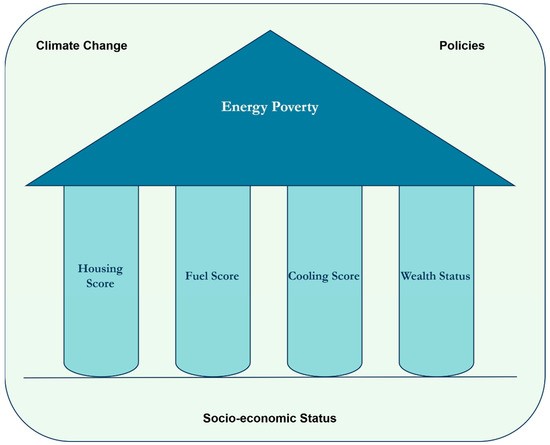
The study introduces a newly developed Energy Poverty Index (EPI), grounded in the multidimensional definition Mohammad developed during his PhD. The index is built on four key pillars (see the figure), taking into account climate change, policy context, and the socio-demographic characteristics of Jordanian households. Their findings highlight that energy poverty in Jordan is both infrastructural and spatial. Households experience energy poverty differently depending on their governorate, with the highest in Mafraq and the lowest in Amman. They also explored the determinants of energy poverty, finding strong associations with education level, gender, age, and housing type, among other factors.
This work provides valuable insights into the complex nature of energy poverty and offers guidance for more targeted policy interventions.
Read the full publication here: https://www.mdpi.com/2413-8851/9/7/263